BS / Marine & Environmental Sciences
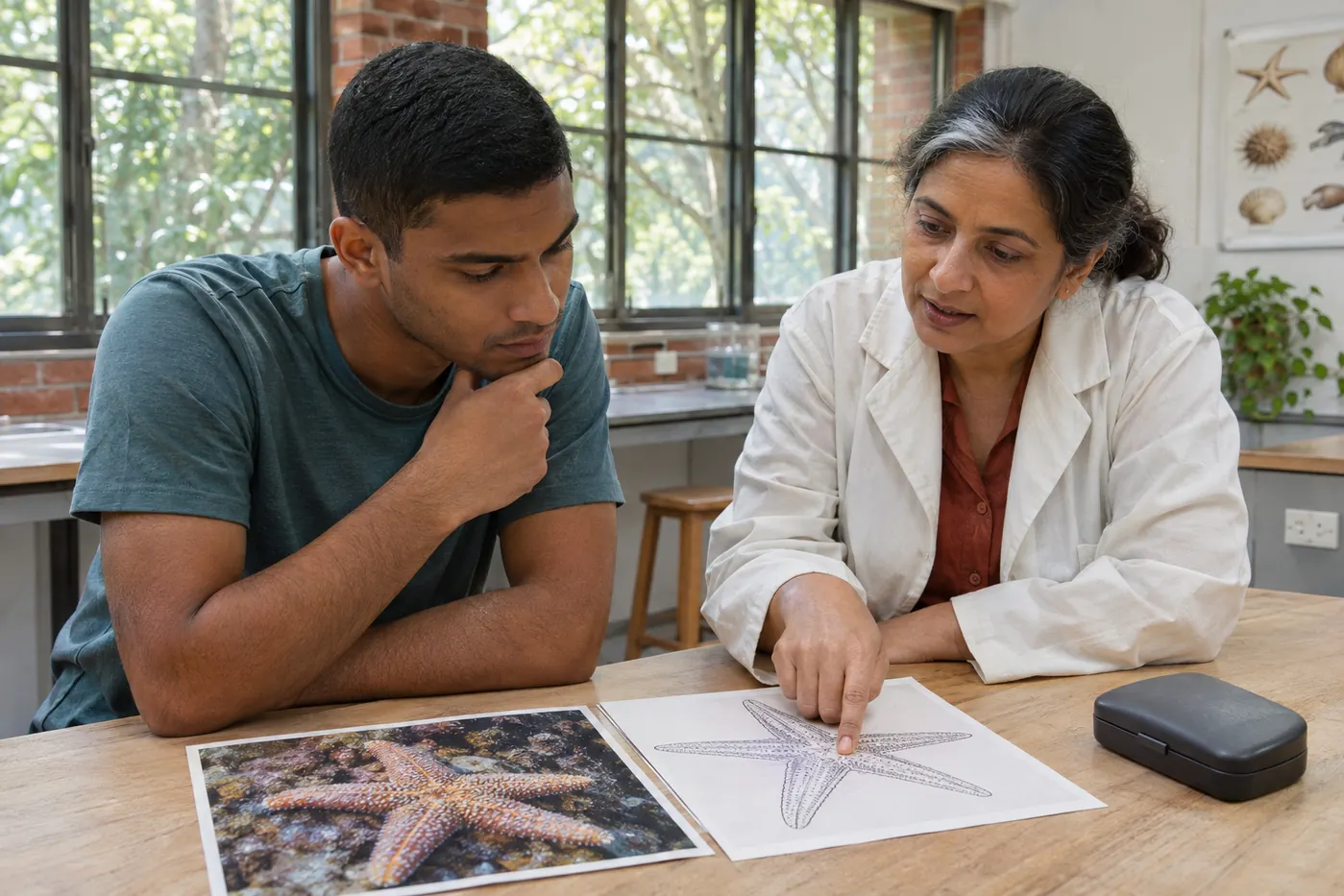
Marine Biology
Learn to describe marine organisms in context and connect a biological question to observations that can be checked.
120 credits / eight terms. Annual resource fee $980.
Study
Compare eight degrees by subject, method and qualification.

Each four-year route combines a defined major, shared foundations, general education and named cross-program electives. Four BS and four BA degrees approach coasts through distinct evidence and questions.
Connect living systems, estuarine comparisons and chemical evidence through observation, supervised laboratory work and carefully described records.
Study how a coastal place is represented, compared and discussed through maps, spatial sources and planning questions.
Examine how places are interpreted, explained and visited through historical evidence, communication and realistic operational choices.
8 results
No matching result. Try fewer filters or another word.
BS / Marine & Environmental Sciences
Learn to describe marine organisms in context and connect a biological question to observations that can be checked.
120 credits / eight terms. Annual resource fee $980.
BS / Marine & Environmental Sciences
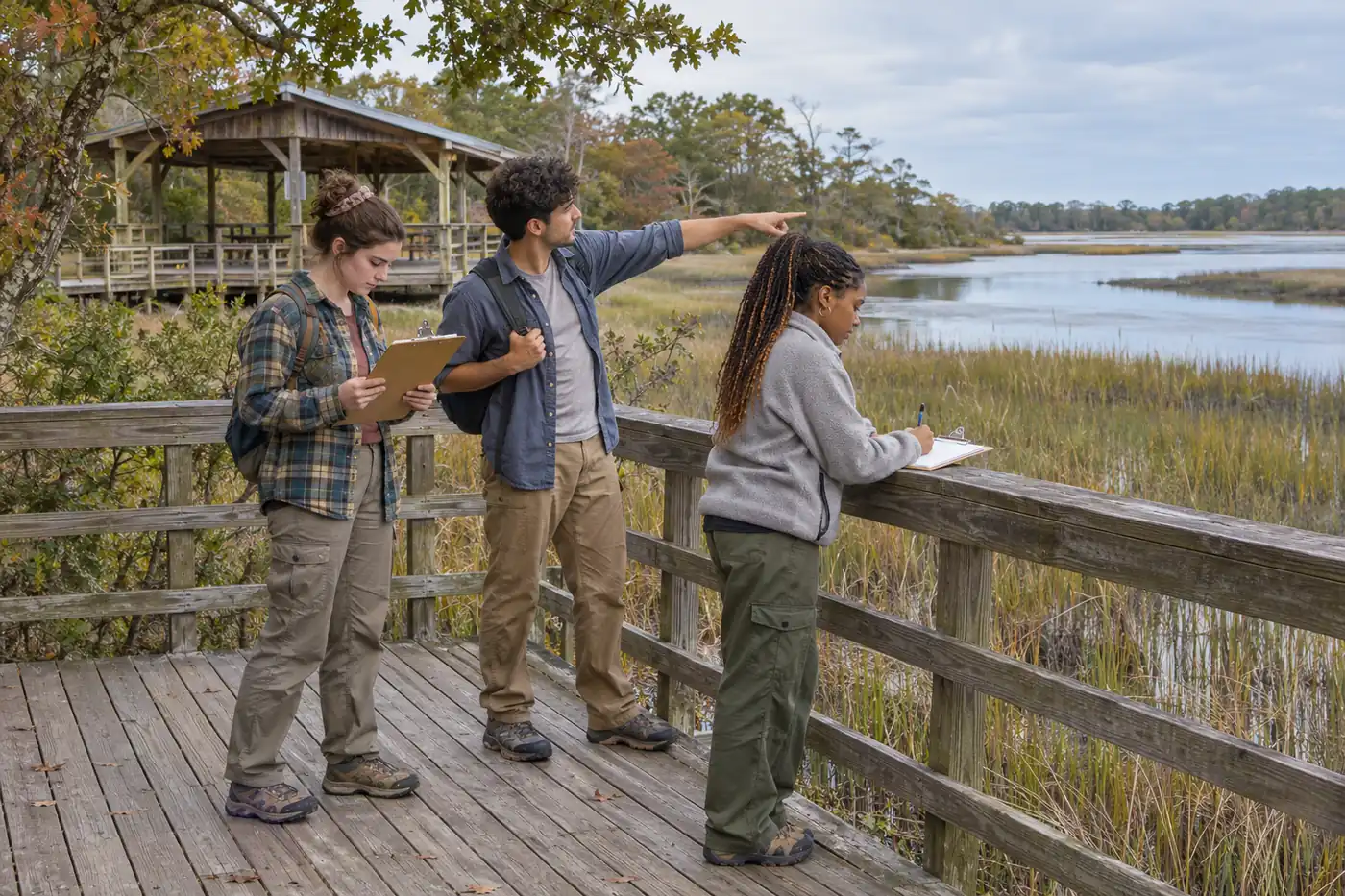
Study variation across an estuary through repeatable observations, sample records and comparisons made at a defined scale.
120 credits / eight terms. Annual resource fee $980.
BS / Marine & Environmental Sciences
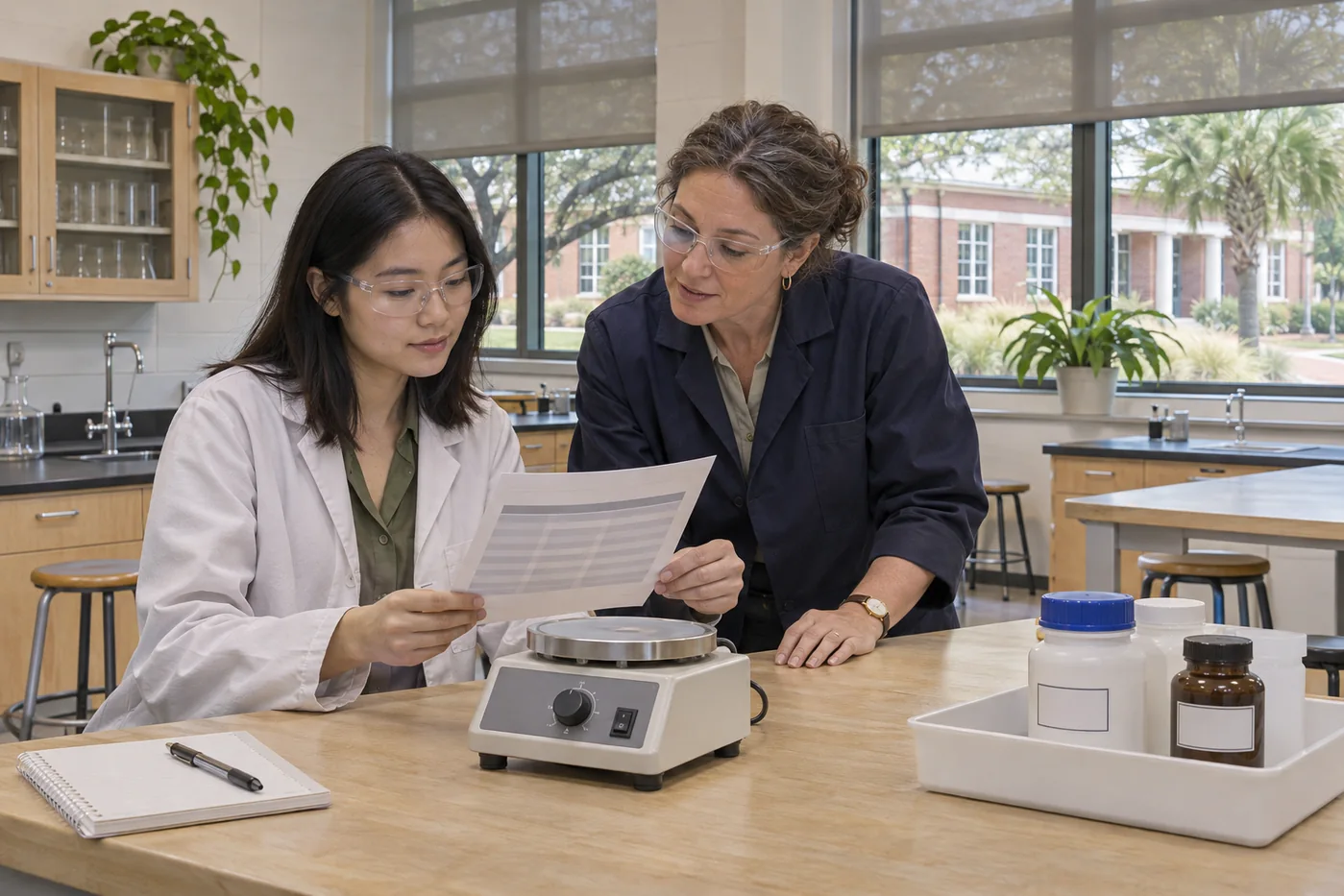
Connect foundational chemistry and supervised analysis to sample identity, quality records and appropriately limited interpretation.
120 credits / eight terms. Annual resource fee $980.
BS / Spatial & Coastal Systems
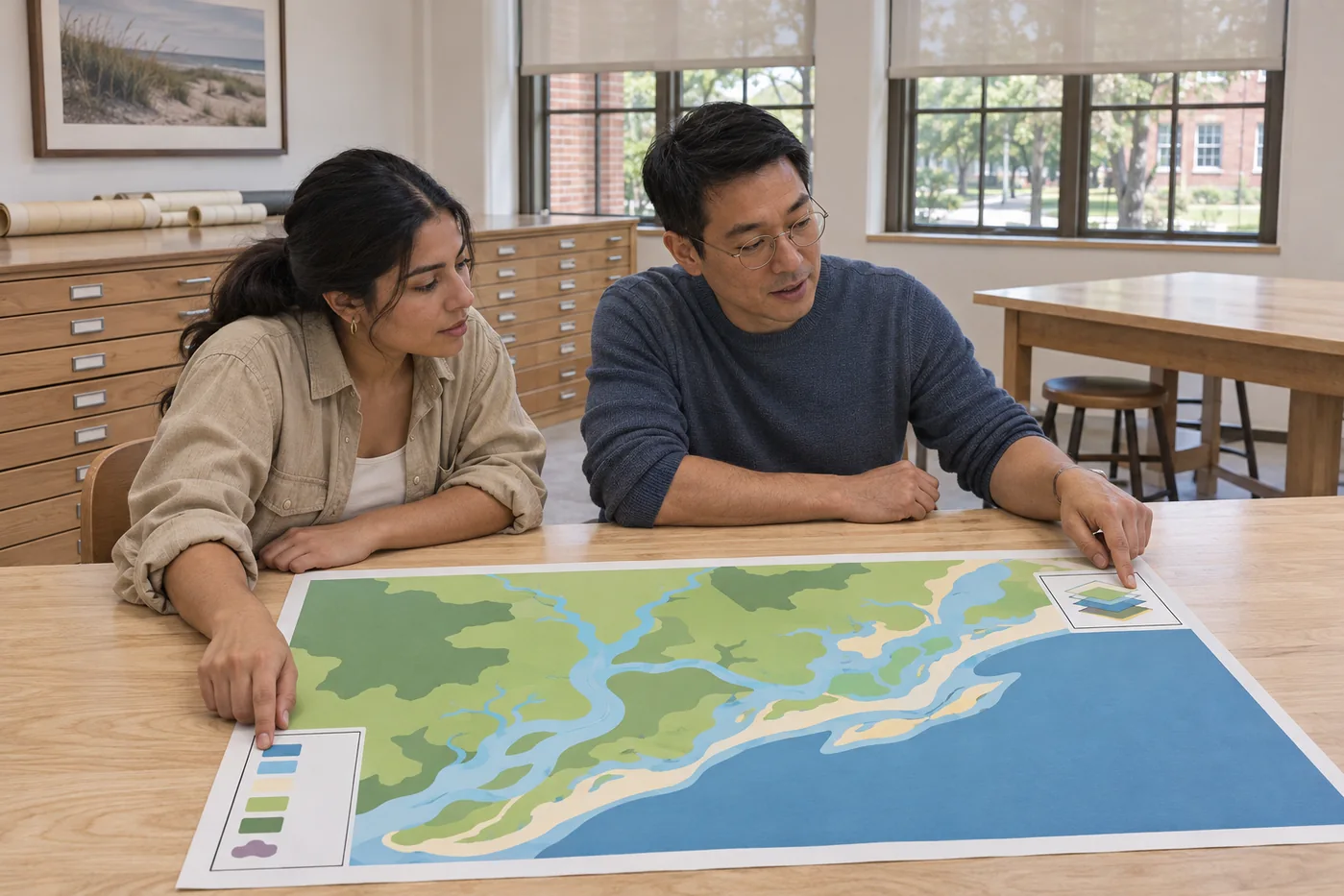
Build spatial accounts of coastal places with clear sources, consistent scales and an honest view of missing information.
120 credits / eight terms. Annual resource fee $680.
BA / Spatial & Coastal Systems
Compare how coastal places are used and governed through public documents, realistic options and clearly stated tradeoffs.
120 credits / eight terms. Annual resource fee $420.

BA / Coastal Communities & Communication
Develop accounts of coastal places through careful source comparison, attribution and interpretation for a public reader.
120 credits / eight terms. Annual resource fee $420.

BA / Coastal Communities & Communication
Explain environmental questions for different readers while keeping evidence, context and uncertainty attached to the message.
120 credits / eight terms. Annual resource fee $420.
BA / Coastal Communities & Communication
Study how people visit coastal places through interpretation, practical operations and explicit environmental and community considerations.
120 credits / eight terms. Annual resource fee $420.
One semester credit represents approximately 45 hours of combined instruction, supervised activity and independent work over a 15-week teaching term. Six-credit integrated courses normally combine about six contact hours and twelve independent hours weekly. Laboratory and field sessions follow the approved course timetable.
The sample plans name every elective. Seminar 141 courses are introductory and open across majors in Fall or Spring. A course counts only once toward the degree, and alternative electives require adviser review of prerequisites, availability and category. BA plans include one other BA introductory 101 course and seven distinct cross-program 141 seminars.