News
A small label change makes the sample record easier to follow
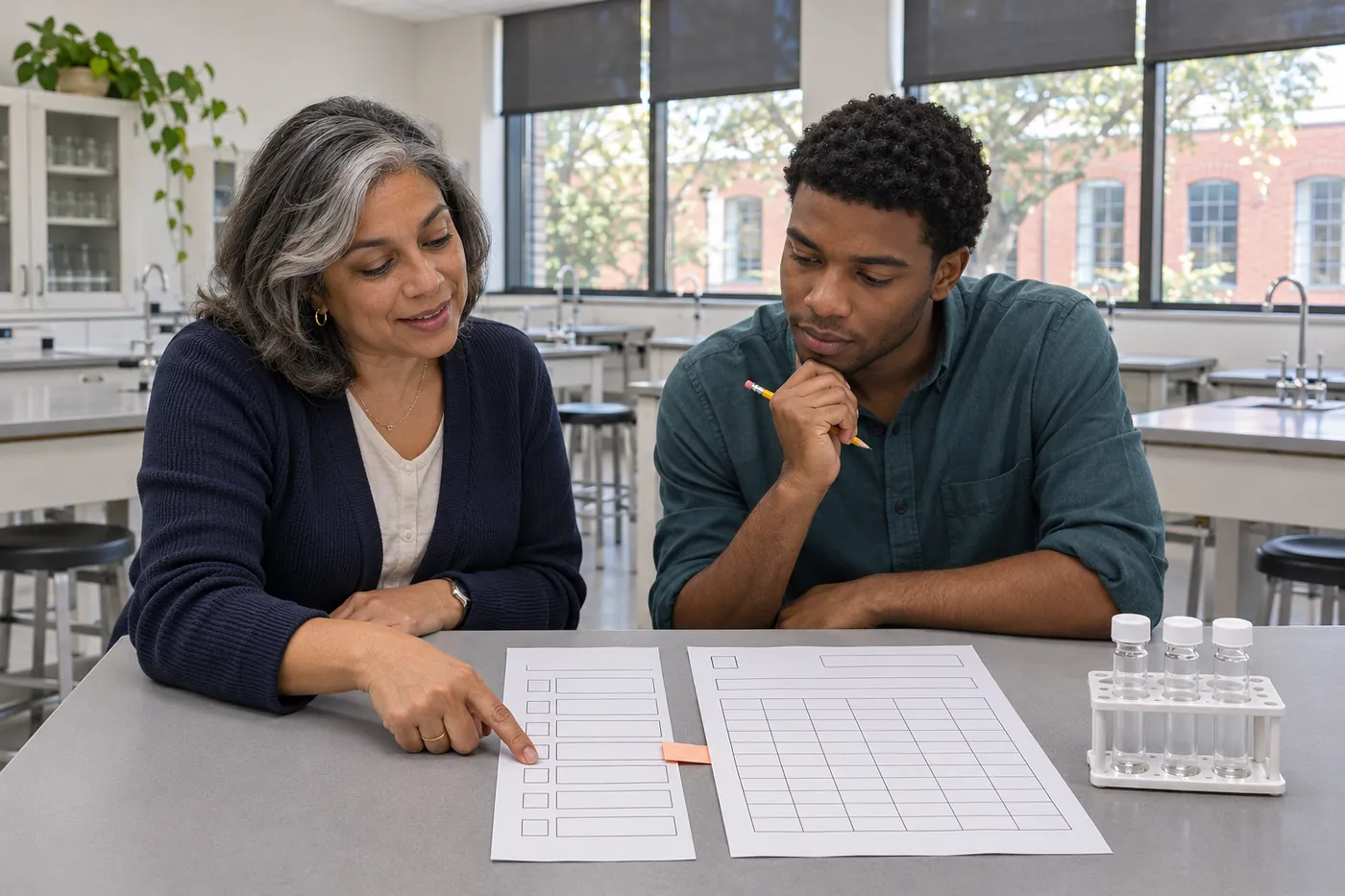
A teaching exercise in Estuary Learning Lab has moved the source identifier beside the reported value instead of leaving it on a separate sheet. The revision came from a classroom review of how students read a short analytical record. A number was easy to find, but the connection between that number, its sample description and the associated quality note was much less obvious.
2026-09-29 / Academic Practice
A teaching exercise in Estuary Learning Lab has moved the source identifier beside the reported value instead of leaving it on a separate sheet. The revision came from a classroom review of how students read a short analytical record. A number was easy to find, but the connection between that number, its sample description and the associated quality note was much less obvious.
Students in the water and environmental chemistry sequence used original simulated records alongside supervised course examples. The discussion did not ask whether an unknown public sample was acceptable or compliant with a standard. It asked what a reader could understand from the information actually supplied, and which missing field would prevent a confident interpretation of the teaching comparison.
Program Lead Dr. Miriam Shaw asked groups to preserve the first record before proposing a new layout. Each group made a short correction log that described the changed field and the reason for it. That distinction matters when an edited report is later read as though every part of its presentation existed at the moment the original observation was recorded.
The revised label now carries an identifier, a unit reference and a location for the supporting record. It does not squeeze an entire method into a small printed space. Students still consult the approved course context and the full notebook for the information needed to interpret the example. A compact label supports that connection rather than replace it.
The exercise links laboratory learning with the shared data-checking foundation. Students from another program can examine the same record as a communication or information-design question, provided that the original simulated-source label travels with the example. A clean layout is useful only if it makes an essential qualification easier to see instead of quietly removing it.
The Science Teaching Desk will use the revised classroom format in the next scheduled notebook review. Students should retain existing records and add a traceable correction rather than recopy an archive as if it had never changed. The Equipment and Data Care page explains the broader record principles. This is a teaching update, not a new public water-analysis service.
Author and context.
Connects introductory analytical work with sample identification, quality-control records and appropriately limited conclusions.
Dr. Miriam Shaw
Water and Environmental Chemistry Program Lead
CS 16 · Calder Science House
Tue/Fri 10:00–12:00 ET
Setting: Estuary Learning Lab. This is an original fictional college news account.