News
First-year observation week starts with a second look
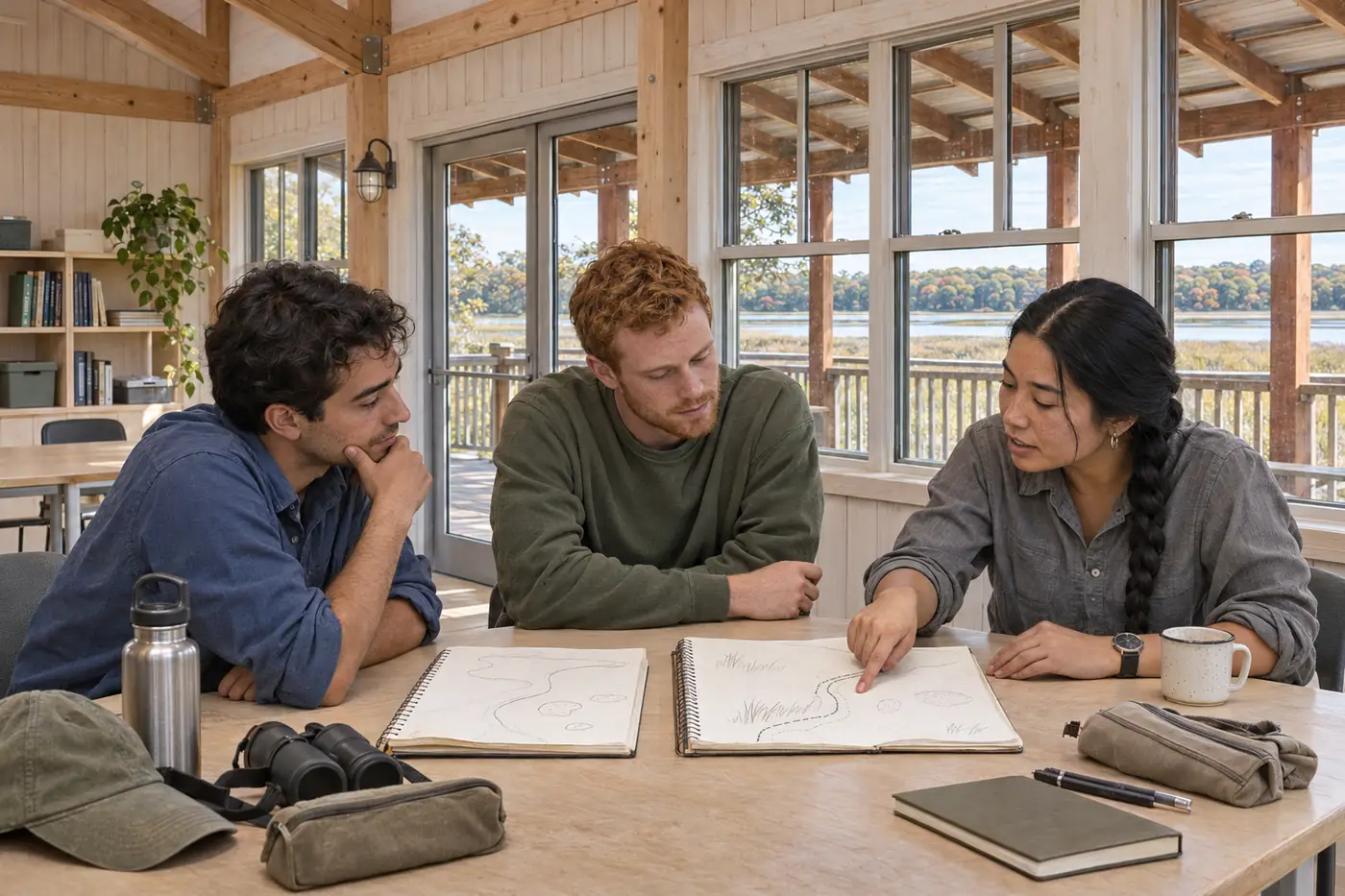
First-year students have returned to a short observation twice during the opening weeks of the shared foundation sequence. The task begins with an ordinary question: what changes in a written account when the observer looks again? Students use a shore-based viewpoint, an indoor observation or supplied teaching images, according to the agreed course arrangement. The aim is a readable record, not an impressive finding.
2026-09-17 / Academic Practice
First-year students have returned to a short observation twice during the opening weeks of the shared foundation sequence. The task begins with an ordinary question: what changes in a written account when the observer looks again? Students use a shore-based viewpoint, an indoor observation or supplied teaching images, according to the agreed course arrangement. The aim is a readable record, not an impressive finding.
Each notebook entry separates a description from the interpretation added later. Students identify the setting, time, viewpoint and source of the material they used. Where a detail is uncertain, it remains marked as uncertain. A first-year discussion compares the two entries before anyone is asked to explain why they differ, keeping the order of observation and inference clear.
Field Learning Coordinator Evan Brooks has worked with course staff on the practical handover between the main campus and the separate station. A timetable entry does not by itself authorize access to either an observation activity or equipment. Students receive a course-specific plan and can discuss an alternative that addresses the same learning outcome when the original activity is unsuitable.
In the classroom review, several groups found that a changed viewpoint explained more than their first interpretations allowed. A wider image could show more features without demonstrating that the setting had become more diverse. Students therefore revised both the comparison and its caption. Their original entries stayed in the notebook, alongside a note explaining what the later version corrected.
The exercise also introduces a shared expectation about evidence across the eight programs. A history student may compare the context of two documents, while a science student compares two observations and a communication student examines two accounts for different readers. The methods are not interchangeable, but all require the source and the boundary of the comparison to remain visible.
The next foundation session turns selected entries into a small checked table or source register. Students should bring both notebook versions rather than only the polished result. The First-Year Foundations page describes the sequence, and Student Support can help with advance discussion of access or timetable needs. No public monitoring result or claim about a real coastal site is being announced.
Author and context.
Coordinates course access, equipment handovers and communication about revised plans at the separate teaching station.
Evan Brooks
Field Learning Coordinator
RW 01 · Reedwater Field Station
Tue–Fri 09:00–16:00 ET
Setting: Reedwater Field Station. This is an original fictional college news account.