Organism observation
Quiet Creek Comparison
What can two short organism observations tell a reader when their viewpoints and recording effort are made explicit?
- Student
- Mina Patel / Year 3
- Course
- BIO 301 / Behavioural Inquiry
- Mentor
- Dr. Saira Desai
- Source
- TH-TEACH-BIO-01
Question
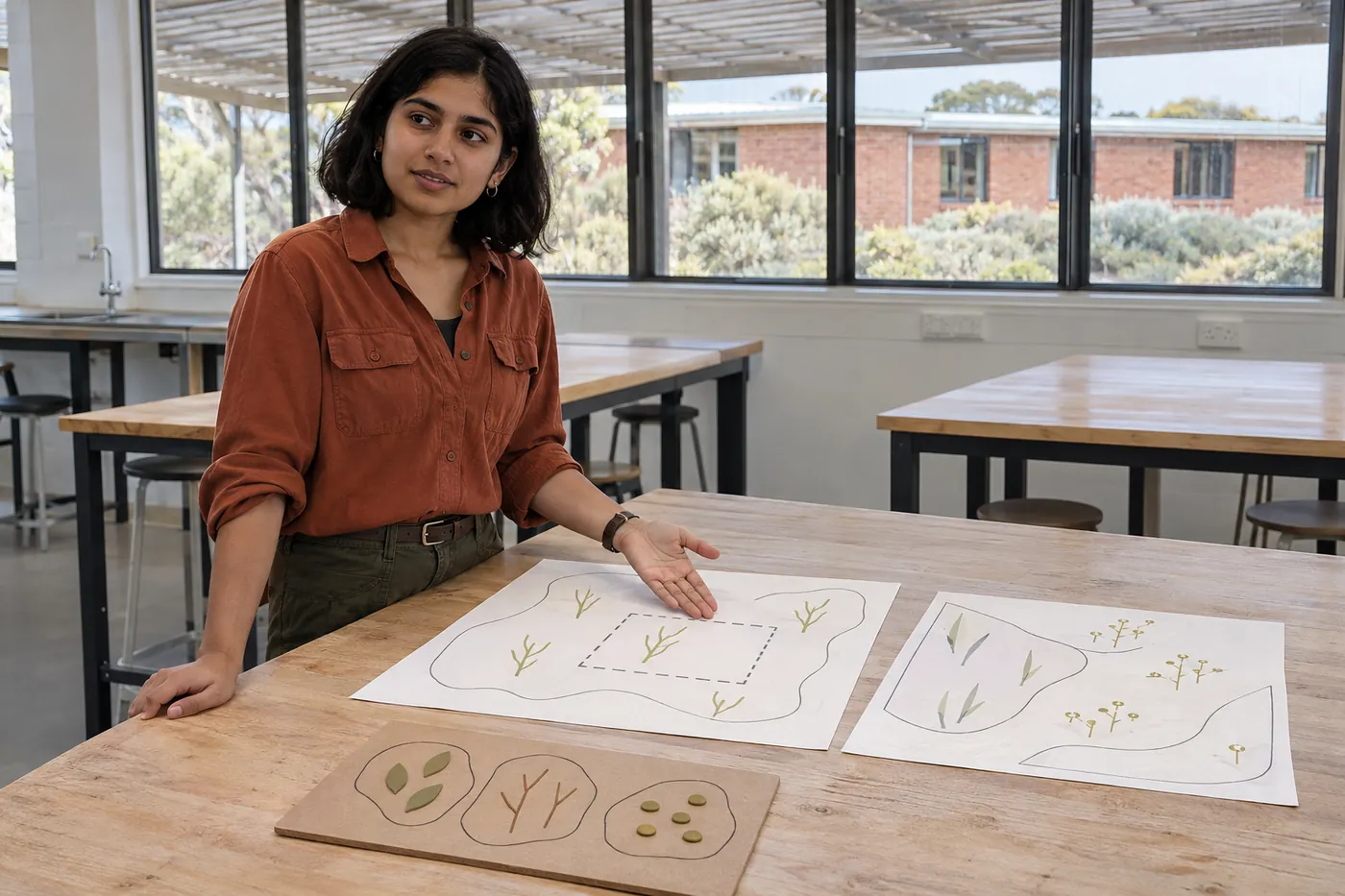
Mina began with two classroom image sequences representing the same fictional creek edge. A longer species list looked persuasive until she noticed that the second sequence covered a wider area. Her question became a comparison of visible features within a shared observation frame, rather than a claim about which part of the creek contained more life.
Method and record
The project used original simulated teaching images and a fixed viewing interval. Mina drew the boundary visible in both sequences, assigned each record an identifier and used descriptive categories where an identification could not be supported. Her notebook kept uncertain entries separate from confirmed visual matches. No real creek survey or specimen collection is claimed.
TH-TEACH-BIO-01 / Original simulated teaching sources
Original simulated image-reading exercise
| Sequence | Visible category A | Visible category B | Uncertain marks |
|---|---|---|---|
| A | 12 | 8 | 3 |
| B | 15 | 6 | 5 |
Classroom records, not a real organism survey. The wider image was restricted to a common viewing frame.
The complete diagram and common observation boundary accompany the count table. Generated campus photographs are illustrative and are not evidence for these exact counts.
Download the complete original teaching sourceA revision
The first table combined a count of individuals with a count of uncertain image marks. During review, Mina split those fields and retained the first version in the archive. She also rewrote the caption to state that an obscured area was missing coverage, rather than interpret it as an area where organisms were absent.
What the work shows
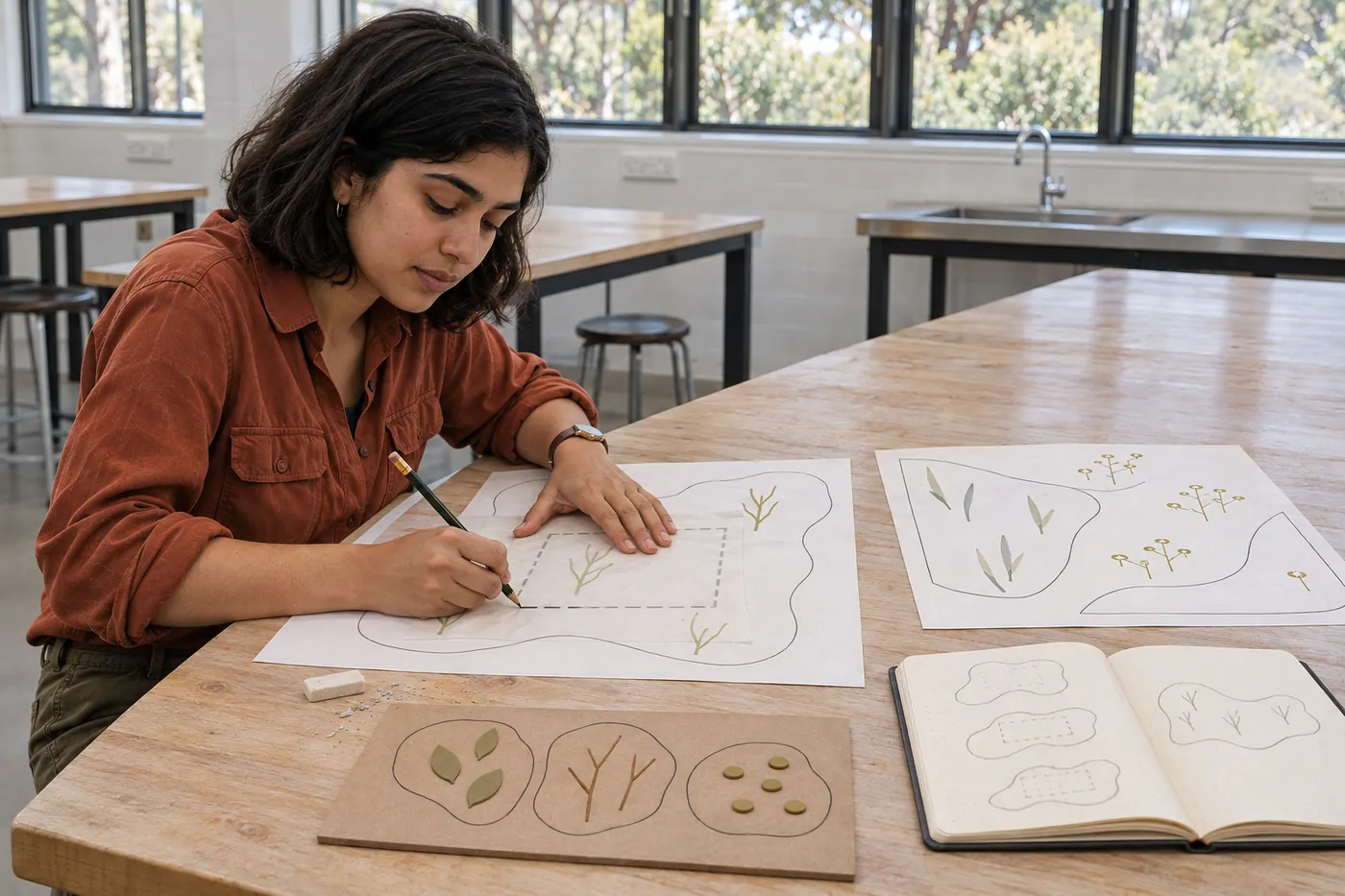
The final comparison shows how two records can differ because of viewpoint and visibility as well as the observed setting. Mina presents the selected images beside the observation frame and a compact category table. The result is a readable account of this exercise, not evidence about a real population or a seasonal biological change.
Next question
A further exercise would use a deliberately matched sequence of viewpoints and retain the same recording interval. Mina identifies that change as a way to improve comparability, while noting that repeated views of one setting would still not represent an entire estuary. The selected archive remains available for the course discussion with its simulated-source label.