How can a short historical label keep two different accounts visible without inventing a voice to resolve their disagreement?
Student
Rowan Adeyemi / Year 3
Course
HIS 301 / Place and Memory Inquiry
Mentor
Rafael Ortiz
Source
TH-TEACH-HIS-01
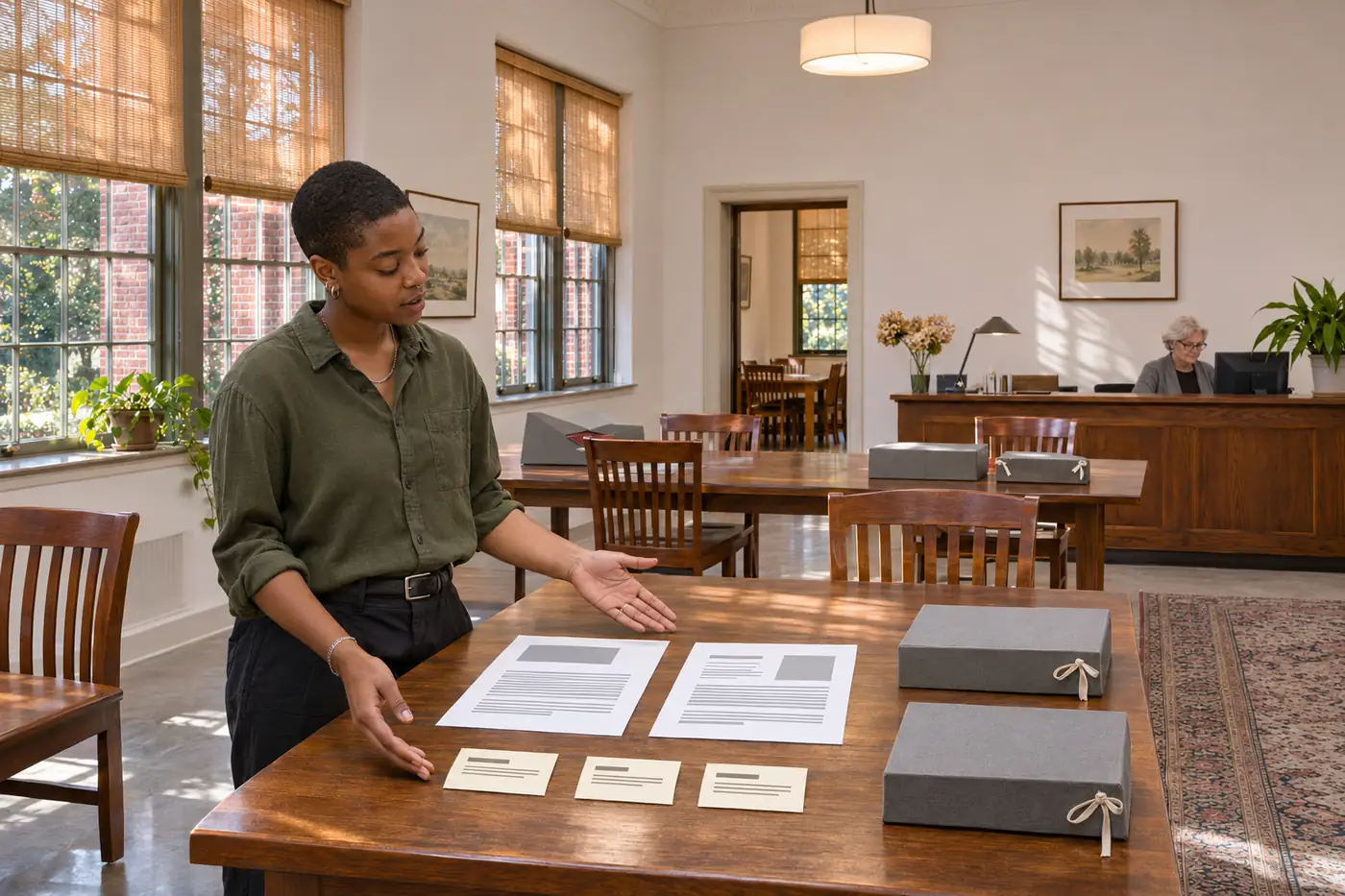
Illustrative project scene; exact evidence is published as native text, tables and diagrams below.
Question
Rowan’s source pack contains two original simulated documents about a fictional waterside reading room. One describes its opening arrangements; the other remembers a later pattern of use. Their dates and purposes differ. The project asked how a short public label could acknowledge both accounts without present a convenient combined story as an established history.
Method and record
Every source in the exercise is identified as an original simulated teaching document. Rowan recorded its assigned creator, date and purpose within the scenario, then separated a direct quotation from paraphrase and commentary. No quotation is attributed to a real resident, and the project does not claim that Harbor Archive possesses a real historical collection about this invented place.
TH-TEACH-HIS-01 / Original simulated teaching sources
The room is to open on two afternoons each week while a committee member is present. The first table will hold a reading copy of the local collection list. Visitors may make notes at that table; material in the closed cupboard is to be requested through the person on duty. The sheltered outside seat is available for a short rest, but no document should be taken beyond the room. The committee will review the arrangement after the first month and record any change to opening periods.
Simulated document H2 / 1994-10-12
Later recollection exercise
Assigned creator: Fictional narrator created solely for this teaching exercise
I remember stopping at the room after a morning errand and finding the table already occupied by people comparing handwritten notes. Sometimes someone would bring a reading copy to the inside end of the doorway so another visitor could see it. I cannot now say which year that pattern began or whether it was the committee’s stated arrangement. What I remember most is the conversation around the table, rather than the timetable pinned beside it. This recollection does not tell us how often the room was open or who could obtain material from the cupboard.
Three interpretive labels.
A room described in two ways
These two original simulated documents describe a fictional reading room through different purposes and dates. An opening note sets out intended arrangements; a later recollection exercise describes remembered use. Reading them together raises a question about the relationship between a stated rule and a personal account. Neither document is a real historical record or testimony from a real resident.
What the opening note can establish
The assigned 1978 note describes two staffed afternoons and a request process for cupboard material. It records what the fictional committee intended to arrange. It does not establish whether that pattern was followed every week or how every visitor experienced the room. The later teaching recollection cannot be used to silently fill those gaps in the opening record.
A question left open
The assigned 1994 recollection places informal conversation at the centre of the remembered room, while acknowledging uncertainty about dates and official arrangements. A larger account would need appropriate further sources to compare that memory with actual practice. This classroom sequence keeps the unresolved difference visible instead of inventing a witness or an event to make the story complete.
Source
Assigned date
Question it supports
Opening note
1978 in scenario
How the room was intended to operate
Later recollection exercise
1994 in scenario
How one fictional account remembers its use
Both documents and all assigned identities are invented for teaching; no real resident testimony is claimed.
Show the simulated-source label with both documents, the three labels and any quotation. Assigned dates and creators belong to the classroom scenario only.
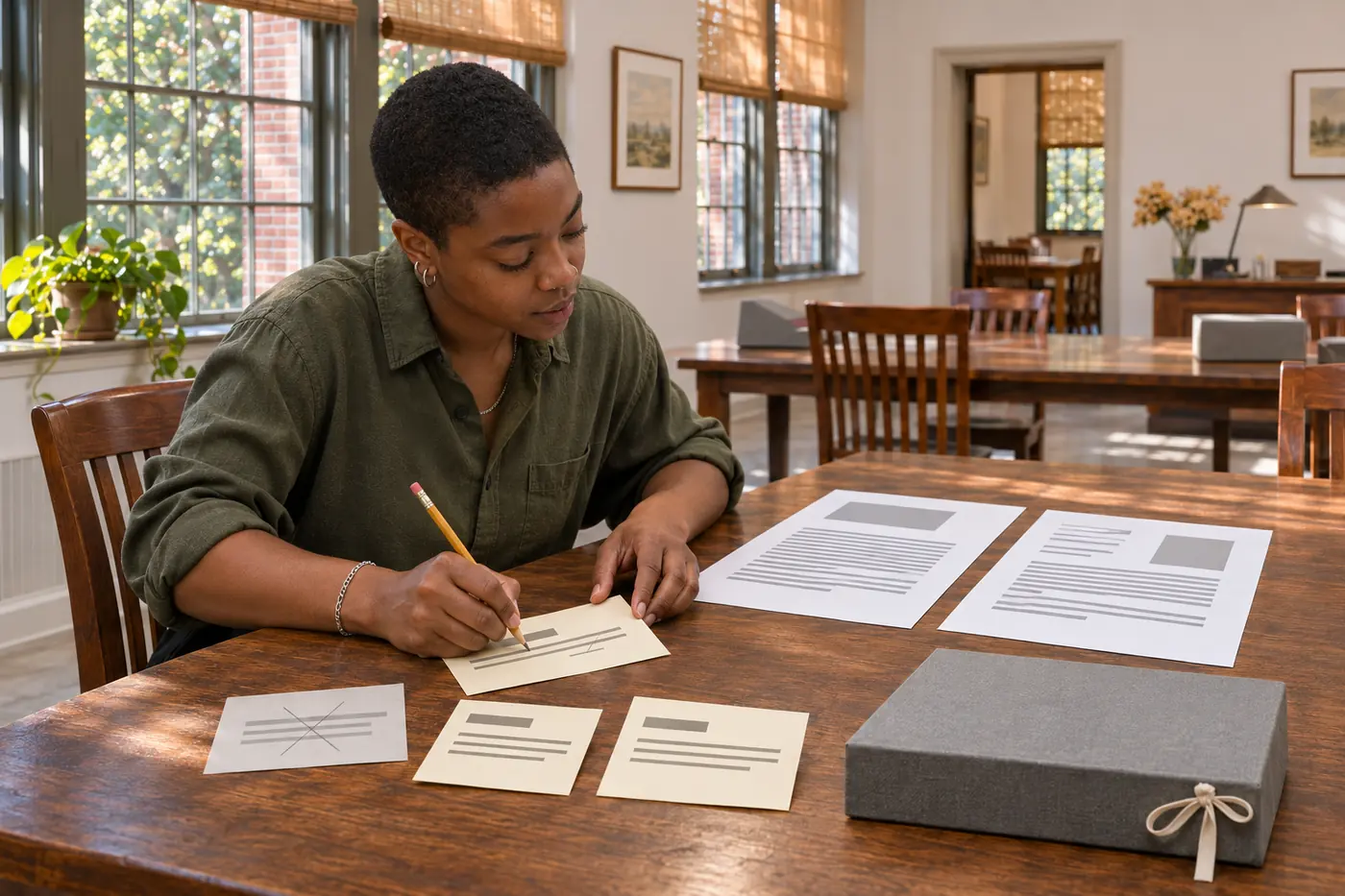
An early label began with an imagined sentence from an unnamed worker. Rowan removed it because the supplied documents could not support that voice. The revised label instead introduces the two sources and tells the reader why they answer different questions. A short source note carries the simulated-material label alongside the interpretation.
Another stage of the same student’s work. Photographic paper graphics are illustrative, not the exact source.
What the work shows
The final sequence presents three small labels: a place introduction, the contrast between accounts and a question left open by the record. It demonstrates a selection and attribution process rather than a comprehensive local history. The language remains readable without conceal the source disagreement that gave the exercise its central question.
Next question
Rowan would test whether a new reader can distinguish the account in each document from the student’s interpretive voice. A larger historical project would require suitable real sources and permissions, not just more confident prose. Keeping that distinction visible became part of the public-history work rather than an apology for its small scope.